The Swallow’s Year

Penny Streeter OBE
This is one of a series of reflections, on the ventures I have built alongside A24 Group. Benguela Cove and Leonardslee are the two wine estates at the centre of it, and this is what running both, seven thousand miles apart, has taught me. This is the story behind what we call the Follow the Swallow journey.
People ask me, sometimes politely and sometimes not, why we own two wine estates seven thousand miles apart.
The polite version is: "It must be wonderful, following the summer."
The less polite version is: "That seems like a complicated way to make wine."
Both are true.
Why We Own Two Wine Estates, Seven Thousand Miles Apart
Benguela Cove sits on the edge of a lagoon in Walker Bay, on the southern tip of Africa. Leonardslee sits in a valley in West Sussex, in the south of England. They are at almost exactly opposite latitudes, separated by the Atlantic and the equator, and by about five months of growing season.
Our Cellarmaster, Johann Fourie, works across both. He picks Sauvignon Blanc at Benguela in February and Chardonnay at Leonardslee in October. He follows the swallow, more or less. The swallow is the bird that does this same journey on its own, between Sussex woodlands and the South African summer, and it has done so for longer than there has been wine in either country.
What Moving Between Hemispheres Teaches a Winemaker
The wine industry treats this kind of arrangement with mild suspicion. The accepted wisdom is that you make wine in one place. You learn that place. You make better wine the longer you stay. A second estate, especially one in a different hemisphere, is sometimes seen as a distraction. A vanity project. A complication.
I want to make the case that the opposite is true, at least for us.
When Johann walks the rows at Benguela in late January, what he is reading is the result of decisions made eight months ago, on the other side of the world, in a different soil and climate. Some of those decisions transfer. Some do not. The discipline of running both estates means that nothing he does can ever be assumed. Every choice is checked against a different reality.
Sussex teaches him patience. England's climate is forgiving in some ways and brutal in others; a Chardonnay row that ripens beautifully one year may struggle the next, and the only response is to wait, to read the season, and to pick when the fruit is ready rather than when the calendar suggests it ought to be.
Walker Bay teaches him precision. The maritime influence of the Benguela current is consistent in a way English weather is not. The wines here can be made with confidence about the season's broad shape. But the salinity in the soil, the cool nights, the closeness of the Atlantic and the lagoon, all demand a specific attention to what makes our Sauvignon Blanc taste of where it comes from rather than where it could come from.
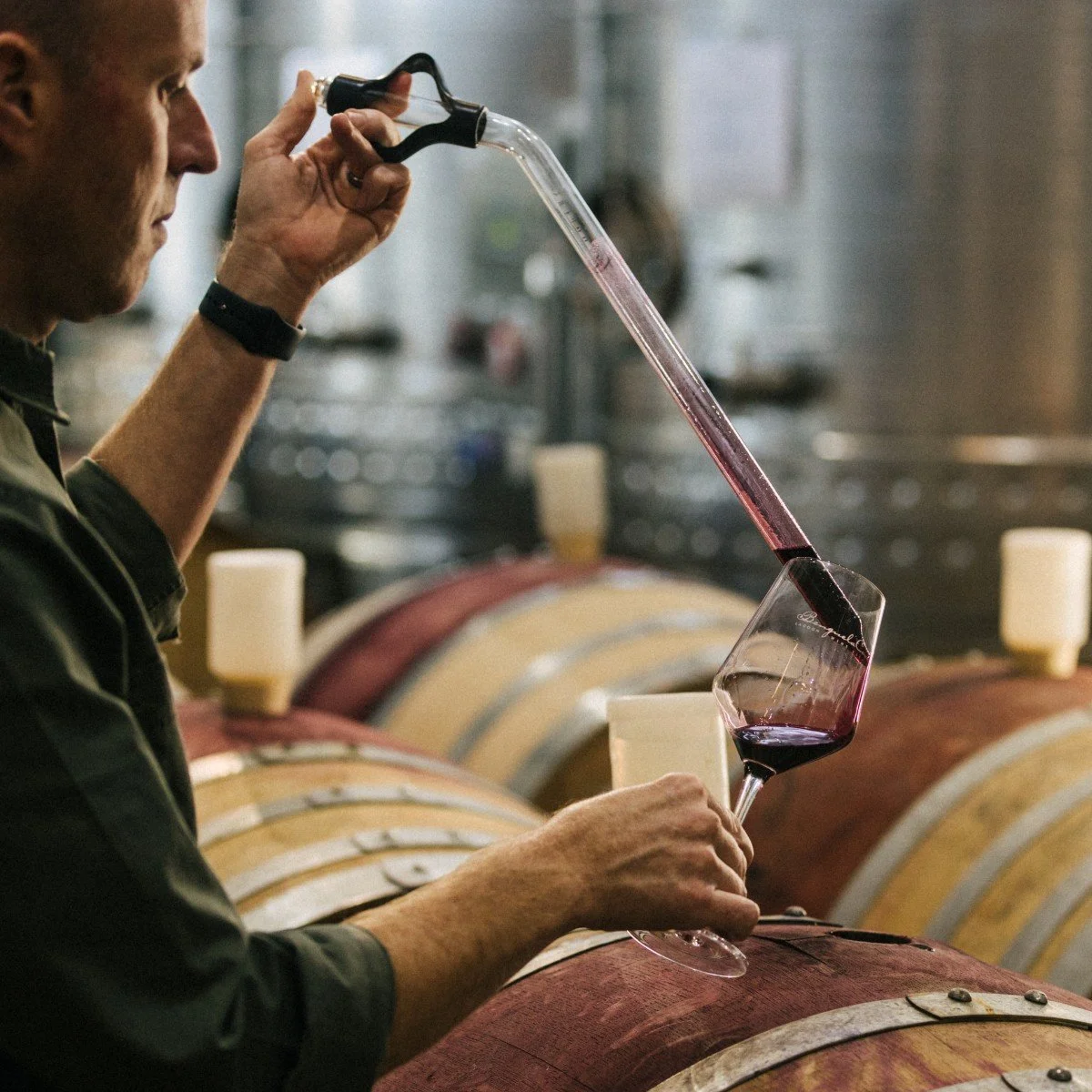
Between the two places, he has become a better winemaker than he could have been in either one alone.
I believe this.
So does he, when I press him.
Two Landscapes, The Same Quiet
There is a second reason for owning two estates, and it has nothing to do with the wine.
It has to do with what happens to people when they spend time on land that is alive.
Leonardslee is an old place. The gardens were planted in the 1880s by a Victorian botanist who collected rhododendrons from across the world. Walk them now in May and there are species of azalea and magnolia that you will not see together anywhere else on earth. The lakes were cut by hand. The wallabies, which still graze on the lawns, descend from a colony introduced in 1889.
Benguela Cove is newer in human terms but older in geological ones. The fynbos here is part of the Cape Floral Kingdom, the smallest and most diverse of the world's six floral kingdoms. The species concentration is greater per hectare than the Amazon. The land has been managed by fire, by sea, and by careful human hands for thousands of years.
Both places have the quality of being, for a moment, the only place that exists. You walk in the gardens at Leonardslee in April and the rest of the world goes quiet. You sit on the southern slope at Benguela in February with a glass of our Pinot Noir, looking out across the lagoon to the Atlantic, and the rest of the world goes quiet there too.
This is not a small thing. People come to our hospitality at both estates and tell us, often without quite meaning to, that something has changed for them while they were here. Sometimes they come back. Sometimes, eventually, they choose to live here.
How the Two Estates Support Each Other?
Our owners at Benguela are welcome at Leonardslee, and the reverse. This is not a marketing offer. It is the natural consequence of the structure. If you live on one of our estates, the other is open to you. The wines move between the two, the staff move between the two, and a small but real number of people now move between the two as well.
Some are South Africans who spend summers in Sussex because the English July is the best thing about that country. Some are English who spend February through April at Benguela because the South African autumn is one of the great seasons of the wine world. Some are returning South Africans living abroad who want a foot in both worlds.
This was not planned. It emerged. The fact that two estates in two hemispheres make a kind of sense to a certain kind of person is, I think, the most quietly interesting thing about what we have built.
It is also, more practically, why the two estates support each other commercially in ways a single estate cannot. The off-season at one is the high season at the other. The wine club at one feeds the visiting list at the other. The hospitality operation at each makes the wine more visible than a winery alone could. None of this was a master plan. It was the consequence of doing both things at once and paying attention to what worked.
Which Estate Do I Love More?
I am sometimes asked which estate I love more.
This is the question of someone who has not run businesses for a long time. The honest answer is that I love what each one does that the other cannot.
Leonardslee gives me English light, the slowness of an old garden, the seriousness of a place that has been cared for by a lot of people for a lot of years. Benguela gives me African light, the openness of a working coast, the privilege of being on land that is still being shaped.
The wine, when it arrives in the bottle, carries traces of both. The Benguela Sauvignon Blanc has a precision that Johann learned, in part, from making cooler-climate whites in Sussex. The Leonardslee sparkling has a confidence that Johann learned, in part, from making a passion for producing sparkling wine in South Africa, Methode Cap Classique. None of this would have been the case if we had stayed in one place.
And the people who choose to live with us, in either place, become part of that exchange. They taste it in the wine. They feel it, in the year. They come back.
This is the swallow's year. It is harder than running one estate would be. It is also, I think, more honest about what wine is supposed to do, which is to carry a place forward into a glass and into life.
It is the longest journey our wines make. It is also, in a quiet way, the point of all of it.
About the Author
Penny Streeter OBE is the founder of A24 Group an international business spanning healthcare staffing, hospitality, and property across the UK, South Africa, the United States, and Australia. She is the owner of Benguela Cove Lagoon Wine Estate in Walker Bay, South Africa, and Leonardslee Lakes and Gardens, Mannings Heath Golf Club, and Leonardslee Family Vineyards in West Sussex, England. She splits her time between the two countries.
More From My Ventures
Read more about Benguela Cove Lagoon Wine Estate in South Africa and Leonardslee in West Sussex, or see the rest of my ventures.
You can taste the South African side of this story in our English shop, and the Sussex side of it at Leonardslee's tasting room in West Sussex. Explore the full Benguela Cove range, or read more in Our Story.